

The problem-solution loop. How do we break free?
When faced with a problem, modern education and management have taught us to follow a predictable loop: identify the problem, find a solution, and restore control.
It sounds logical. The default is to treat the challenge as an enemy to be contained. Problem A appears, so how do we mitigate it? How do we reduce the risk, limit the damage, and bring things back to normal?
But in an exponential world, "normal" is a moving target.
The faster the world changes, the more this logic traps us in a cycle of endless firefighting. We spend our energy managing symptoms, patching holes, and containing consequences. Meanwhile, the forces creating the problems continue to evolve, often faster than our solutions can keep up.
We become so busy managing what is happening that we lose sight of what is trying to emerge. And that is where we need a different way of thinking.
To break out of that loop, this essay challenges three prevailing assumptions that currently dominate the discourse on generative AI and human capability:
- 01The Control Fallacy
The assumption that our thinning ability to say “I don’t know” is a governance problem to be managed through rules and mitigation.
- 02The Threat of Overconfidence
The fear that declining specialization is producing a population of shallow, overconfident impostors.
- 03The Myth of Judgment
The belief that human judgment is the ultimate technology of the AI age.
Instead of following public opinion down the usual “how do we control this?” rabbit hole, I want to invite you into a different way of thinking. One that doesn’t begin with control, but with creation.
Stay with me for the next few minutes, and I promise you this: you may begin to see not only why control is so often futile, but also why, beneath the apparent chaos, our world may be far more perfect than we think.
Human Judgment Is Not the Most Powerful Technology in the AI Age
Time magazine recently called human judgment the most powerful technology of the AI age. Knowing when to say “I don’t know” is precisely how judgment gets formed. Yet, as researchers Marcoccia et al. demonstrated in 2026, when you give people an AI-generated answer, almost nobody says “I don’t know” anymore - even when the AI is blatantly, wildly wrong.
Why does this happen? The reasons are human and predictable: the Principle of Least Effort, Cognitive Miser Theory, and Status Quo Bias. Choosing to dive into “I don’t know” requires real cognitive friction and emotional discomfort- it means admitting ignorance, showing vulnerability, and sitting with ambiguity. Because the path of least resistance offers immediate comfort and saves energy, it wins out in almost every daily decision we make.
“I don’t know”
- Cognitive friction+
- Emotional discomfort+
- Admitting ignorance+
- Showing vulnerability+
- Sitting with ambiguity+
Overconfidence
- Overcoming the “Action Inertia”
- Stress Reduction
- Buffer Against Anxiety
- Self-Fulfilling Prophecy
- Evolutionary Efficiency
Principle of Least Effort · Cognitive Miser Theory · Status Quo Bias
Most advice today treats this purely as a governance problem: How do we get people to doubt more? Once again, we find ourselves in the problem-solution loop, trying to control an emerging reality by correcting the probability we fear.
But what if we stepped outside that loop? What if, instead of asking how to control this, we asked: What is the generative intent behind it?
This shift changes everything. We move from containing a problem to exploring its potential.
By shifting our posture, we move from a reactive, diagnostic framework to a developmental one. We stop trying to fix what’s broken and start asking what is trying to emerge. We treat the problem not as an enemy, but as a signal of a system trying to fulfill an underlying, organic need.
What is the practical use of thinking this way? Let’s walk through it together.
When we look for generative intent, we rely on functionalism - the idea that systems and behaviors exist because they serve a purpose. Even destructive habits usually start as a distorted attempt to achieve something positive, like safety or connection.
So pause and think about this: what are we actually losing when we lose the ability to say “I don’t know”? On a collective scale, we lose our predisposition to doubt. And what takes its place? Overconfidence.
At first, the side effects look terrifying. We begin producing fluent, confident answers with no solid grounding beneath them. What looks like knowledge is sometimes just confabulation.
Armed with this intellectual veneer- the right citations, the glossy surface, the perfect tone, but no load-bearing structure underneath - we step out into the world.
We sound like experts. We look the part. But underneath it all, whether we know it or not, we are more often than not intellectual impostors: able to imitate the appearance of understanding without possessing its depth.
The word comes from the Italian dilettare, meaning “to delight.” And its history is more interesting than we might expect. The eighteenth-century Society of Dilettanti was a group of wealthy British amateurs whose enthusiasm for classical antiquity helped fund archaeological expeditions and advance the study of ancient Greece.
Long before it meant “shallow,” it described someone who engaged with a field for the sheer love of it rather than as a rigid profession.
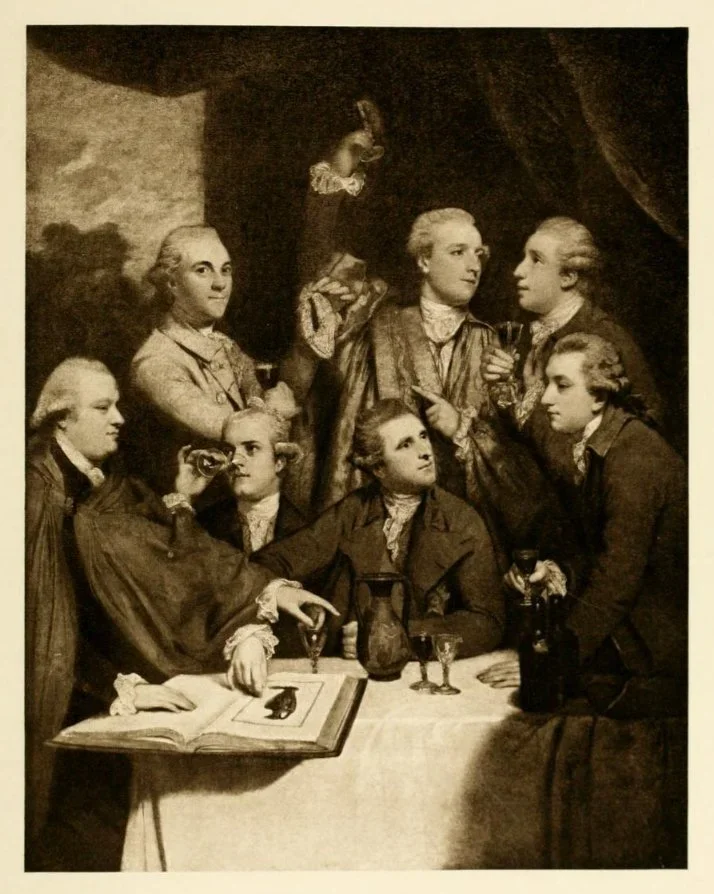
An impostor claims a depth they cannot support. A dilettante moves lightly across the surface, collecting ideas, impressions, and fragments of knowledge without necessarily committing to the hard work of mastering any one of them.
The pathology becomes the skill.
Generative AI makes this kind of engagement almost effortless. We can explore any subject, speak its language, and produce something that looks like expertise, all before we have endured the struggle that genuine understanding demands. We are all slowly high-functioning confabulators: fluent, citation-studded, register-perfect, and hollow. The pathology becomes the skill. That is an unsettling reframe, I know. But it’s the right one to make.
The danger is not that we know a little about many things. It is that we can now mistake the pleasure of knowing a little for the achievement of knowing deeply.
Why, then, do we need to become dilettantes on a collective scale right now? What purpose does this serve society?
Look around: our biggest challenges have completely outrun our specialisms. Climate change, AI governance, public health - these issues span dozens of isolated fields. Specialists own the depth within their silos, but someone has to move between those silos fast enough to see the whole picture. Most costly systemic failures happen between experts, at the seams, not within a single field. The fluent dilettante can carry a vital question from one domain to another in terms both sides understand.
Prioritizing breadth over depth lets us probe many domains quickly and cheaply before committing to one. That fits a world where industries shift faster than a four-year degree can keep up with. It empowers citizens, board members, and leaders to interrogate experts instead of blindly deferring to them. And it drives creative recombination - the best breakthroughs almost always happen when two unrelated fields collide.
Even overconfidence itself carries a hidden engine.
It compels action.
Overconfidence is why founders start ventures despite terrible odds; most fail, but society reaps the rewards of the few that succeed.
It lets outsiders in.
You need a certain amount of unwarranted confidence to attempt an expert’s problem at all. In open innovation contests, solvers from distant fields routinely crack problems that stumped specialists.
It exposes ideas to testing.
An overconfident claim made out in the open is a claim that can be proven wrong- and being wrong in front of others is how we calibrate our thinking. Timidity hides the gap; overconfidence brings it into the light, forcing us to build collective discernment.
Now, I’m not ignoring the dark side. A fully confabulated world poses massive risks. AI models trained repeatedly on their own output suffer from “model collapse,” losing rare cases and converging on bland sameness. A human society running on fluff validated by fluff will suffer the exact same fate. Fluency loses its meaning, reality eventually corrects us late and hard, deference collapses, and power concentrates solely with whoever controls ground-truth verification.
- 01Fluency loses its meaning
- 02Reality corrects us late and hard
- 03Deference collapses
- 04Power concentrates with whoever controls ground-truth verification
This brings us right back to our core question. If overconfidence is the new terrain, then doubt is the precious resource it makes visible.
Here is where standard public opinion gets it wrong. Time magazine claimed that "judgment is the most powerful technology in the AI age".
We praise judgment as the scarce, uniquely human skill in the age of AI. But we rarely ask what gives good judgment its starting point.
Doubt.
Without doubt, there's no question to examine, no space to weigh alternatives and no reason to choose carefully. And that's the twist. AI floods us with fluent answers, so we turn to human judgment to decide what's true. But if we want better judgment, shouldn't we pay more attention to the doubt?
But judgment is merely the outcome. The real engine underneath it - the capability we actually need to cultivate - is doubt.
The core relationshipIn the age of AI, we celebrate judgment. But perhaps the skill we need most is the courage to doubt.
Doubt is what starts judgment, while judgment merely resolves it. Think of doubt as an irritation - a signal that something is incomplete - that drives inquiry until belief settles again. Without doubt, there’s nothing to evaluate; you simply accept. Judgment weighs that doubt, decides what would settle it, and commits to action anyway.
Good judgment is simply calibrated doubt: doubting the right things to the right degree, and knowing when to stop doubting and act.
Doubt
An irritation — a signal that something is incomplete.
Inquiry
The irritation drives us to look further.
Judgment
Weighs the doubt and decides what would settle it.
Action
Belief settles; we commit, even without certainty.
Machines are becoming incredible at settling doubt by checking claims against history at lightning speed. But they cannot feel the irritation of doubt at the right moment, nor can they decide which doubts actually matter for our future. The human role isn’t to do the clerical checking anymore; it is to hold the criteria, bear the accountability, and feel the doubt itself.
| Machines | Humans |
|---|---|
| Settle doubt | Feel the irritation of doubt at the right moment |
| Check claims against history | Decide which doubts actually matter |
| Work at lightning speed | Hold the criteria, bear the accountability |
If this redistribution of intellectual labor makes you uneasy, remember that we've been through a trade just like this before.
After the invention of the printing press in Europe, scholars panicked over information overload. They lamented that there were too many books and far too many unreliable authors. That flood forced the invention of entire new cognitive tools: indexes, reference works, systematic note-taking, and the art of skimming.
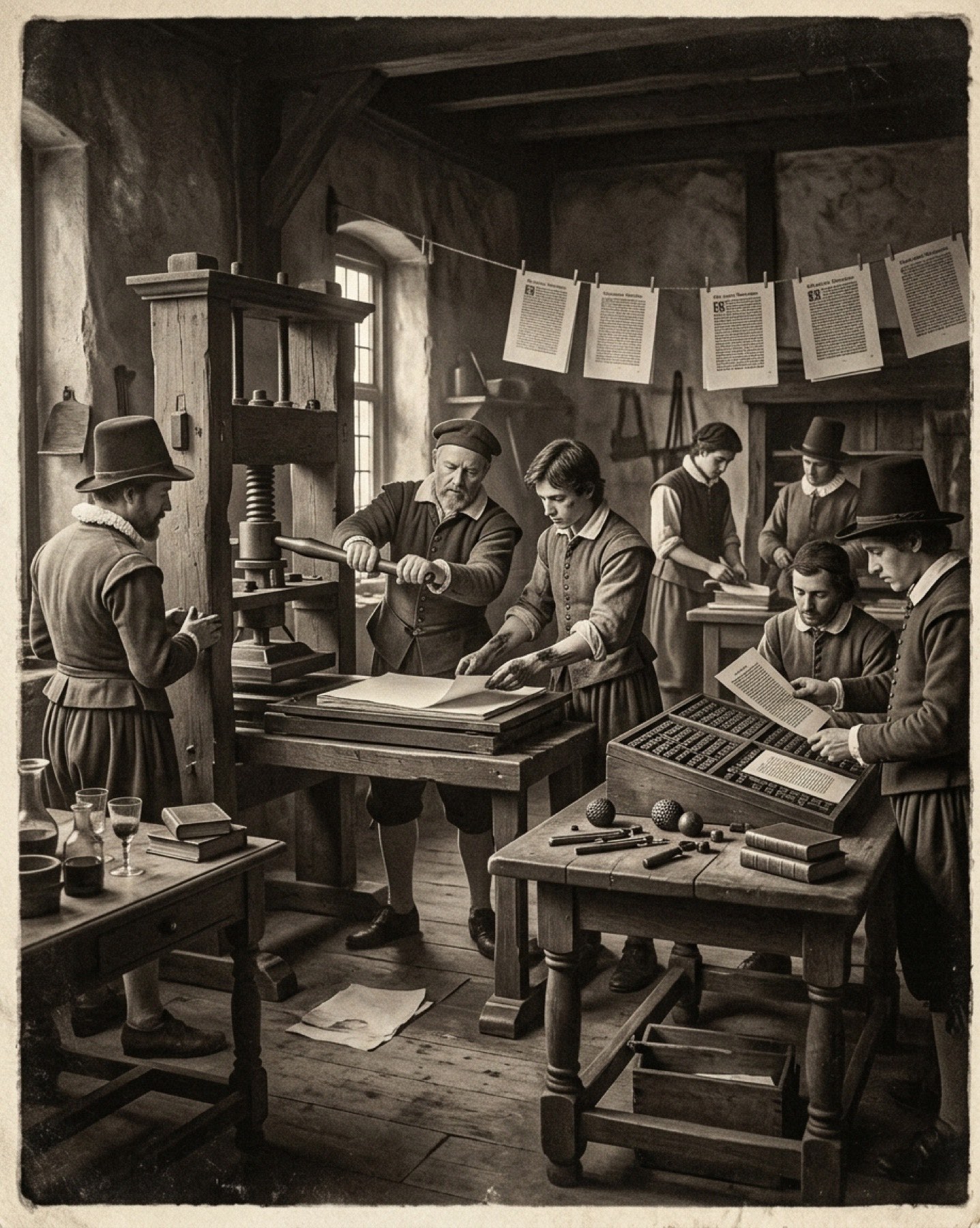
Historians call this the move from intensive to extensive reading. People stopped rereading a few sacred texts closely and started reading many texts once. The panic back then sounds almost word-for-word like today’s complaints about AI: Too many sources, superficial readers, the death of human depth.
A few texts, read again and again
Many texts, read once
Yet that trade of depth for breadth birthed the Enlightenment—enabling cross-source comparison, the encyclopedic project, and a reading public capable of engaging in debates far beyond their local trade. The earlier scholar was the master of a few books; the extensive reader was the dilettante of many. We mourned the shift at the time, but in hindsight, it was extraordinarily generative. It didn’t destroy depth; it redistributed it. Breadth became the baseline for the many, while depth concentrated in specialized fields.
We stand at that exact same threshold today. Having built systems that hold the world’s data and cumulative knowledge, we no longer need to carry all of it in our individual heads.
What if we stopped treating this shift as a crisis to be governed? What if we embraced breadth fully, cultivated calibrated doubt, and trusted human judgment to do what it has always done best?
Talk to us about your next change →